Our Story
From an early fascination with machine intelligence in 1991 to Fortune Global 500 deployments today. Three decades of bringing clarity to complex IT landscapes.
From an early fascination with machine intelligence in 1991 to Fortune Global 500 deployments today. Three decades of bringing clarity to complex IT landscapes.
october 1991 - Fascination
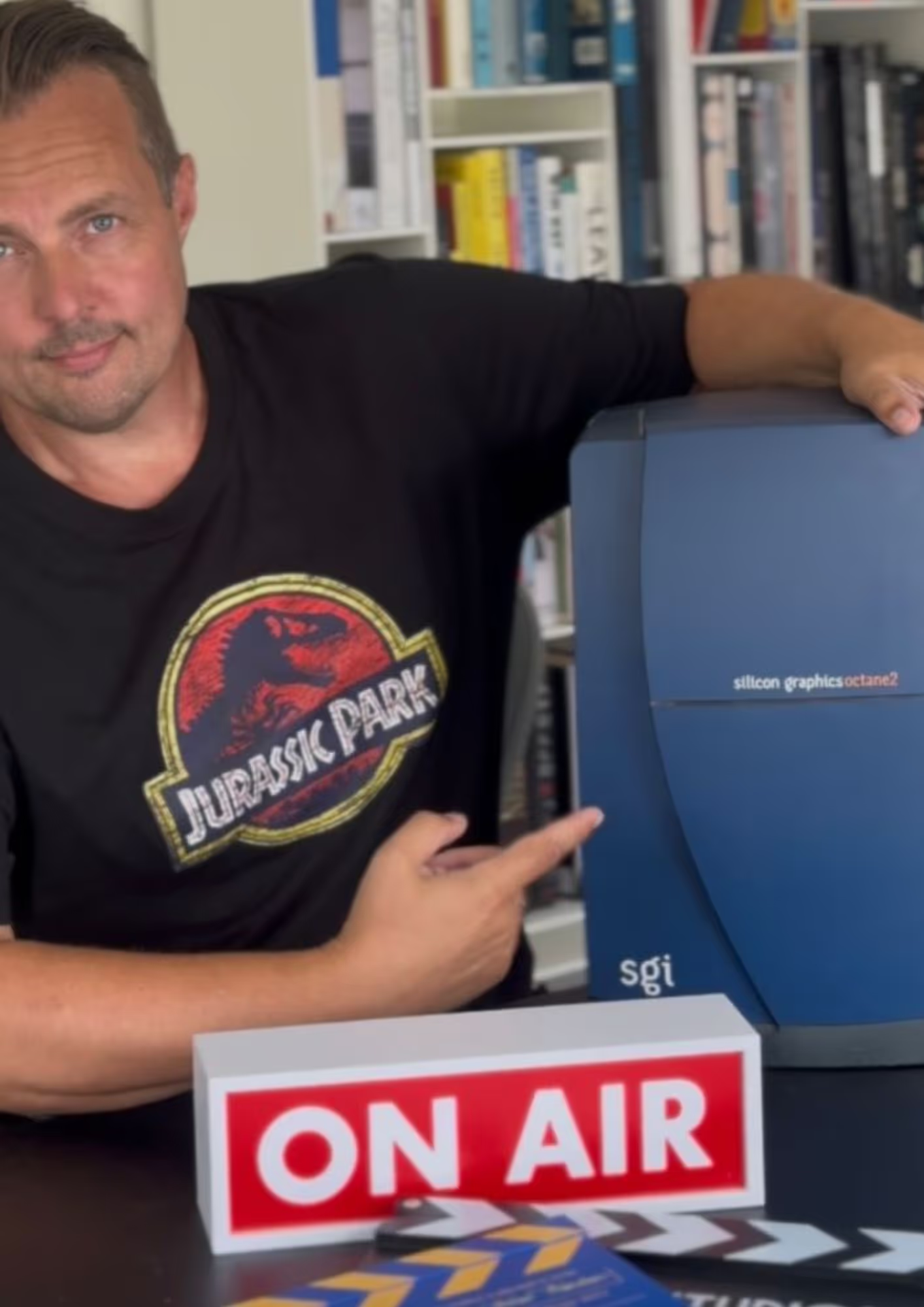
Mugato's founder, Michael Frandsen, met AI for the first time on a Silicon Graphics workstation, the same kind of machine Hollywood was using to render Jurassic Park and Terminator 2.
The foundational techniques were already known: causal logic, predictive models, fuzzy logic. What was missing was compute.
Watching AI emerge inside CGI departments, not labs, was what pulled Michael into IT for the next 30 years.

1999 - Ignition
By the late 1990s, Michael had built a reputation for solving the problems Microsoft and IBM had walked away from, particularly around data at scale, security and performance tuning. That reputation brought a call from Microsoft.
The result was the launch of Active Directory in Denmark for more than 2,000 users. The project established his expertise in enterprise identity infrastructure, foundations that would later become central to Mugato.
october 2007 - Recognition
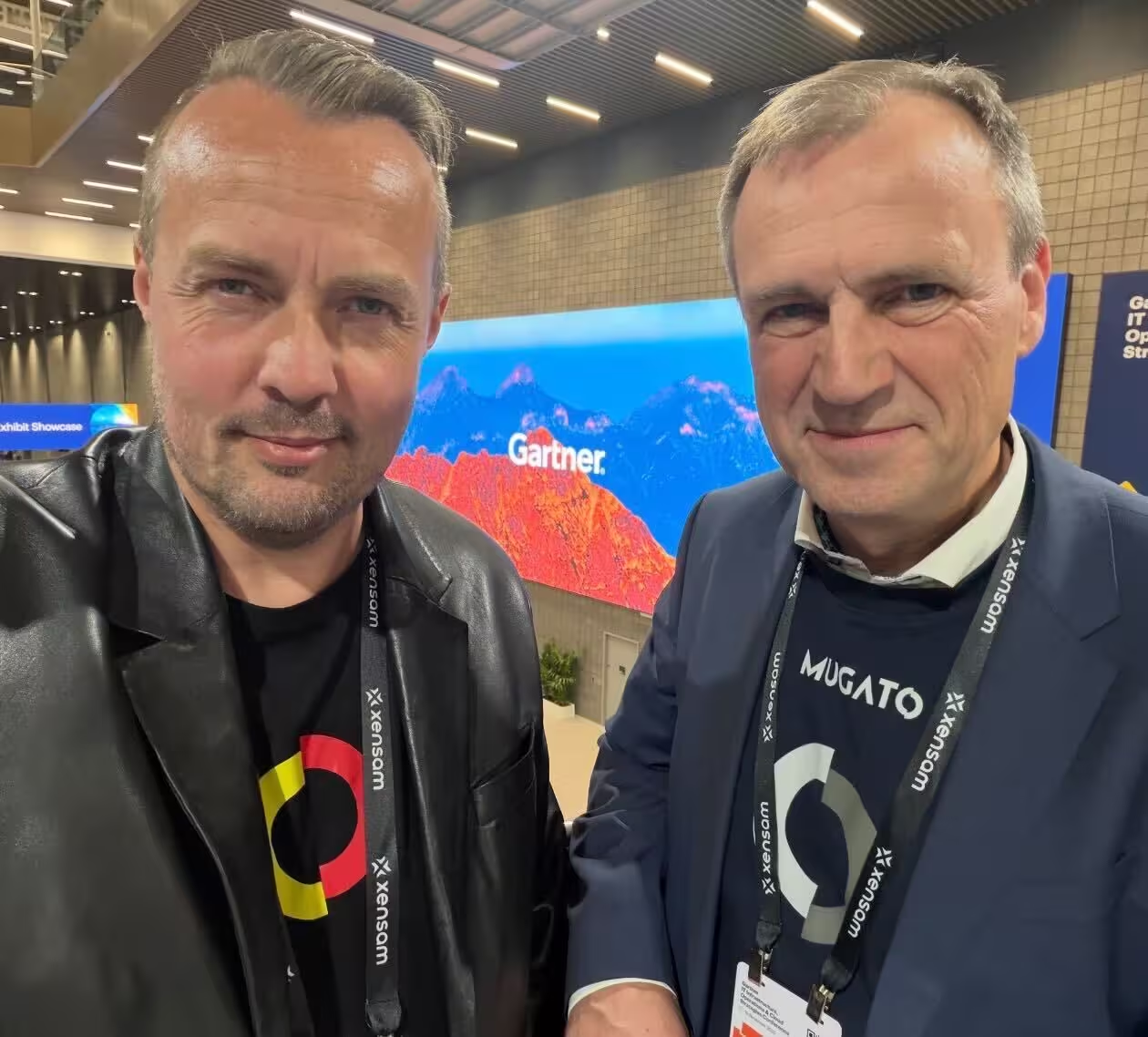
In October 2007, Gartner placed Microsoft SQL Server in the leader quadrant for Data Warehouse Database Management Systems. The decision rested on three reference customers: Salling Group (then Dansk Supermarked), TDC and Premier Bankcard.
Michael led two of those three installations personally, and wrote the HP best-practices the third was built on, working alongside Microsoft and HP R&D to push enterprise data platforms further than anyone thought they could go.
Late 2015 - Inception
After two decades of consulting and ten years of refining the underlying logic across hundreds of enterprise engagements, Mugato's founders began turning that work into commercial software.
The trigger was GDPR. Compliance demanded a precise understanding of how data moved between systems, and the alternatives at the time were probabilistic, full of guesswork. The goal was different: a deterministic engine that could automate transformation work without ever having to guess.
September 2019 - establishment
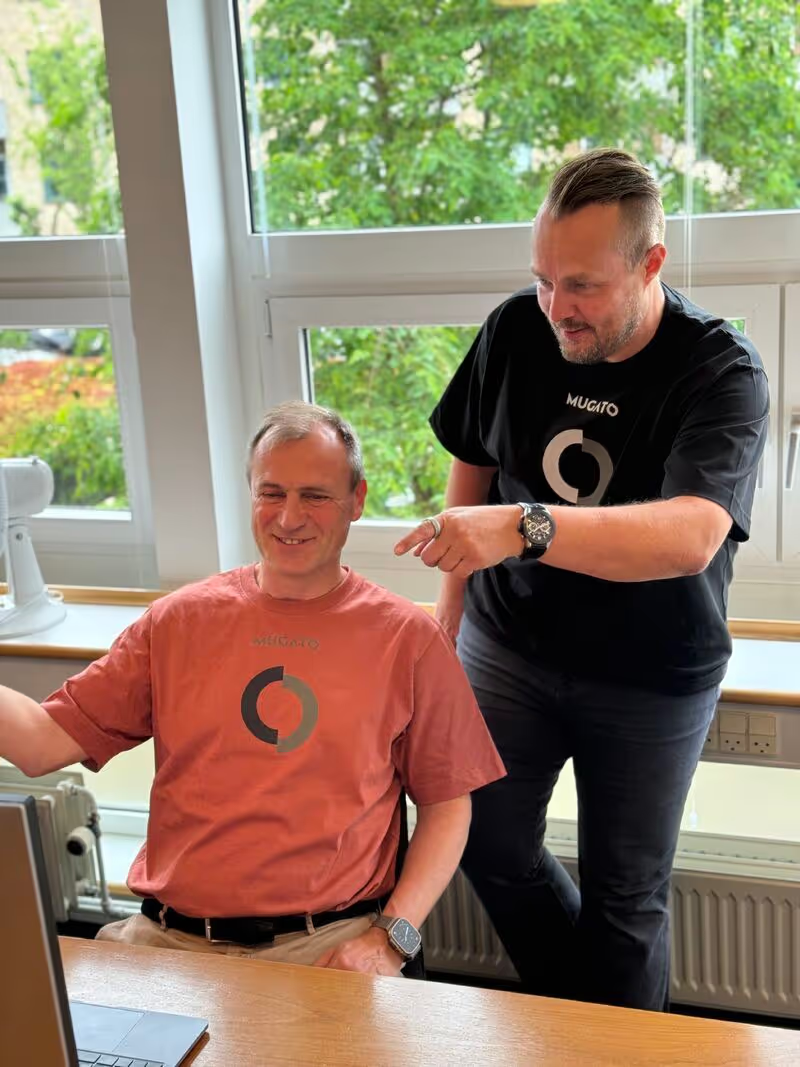
Mugato launches in Copenhagen with a founding team that includes patent holders and developers with PhDs in AI.
Some of Denmark's largest enterprises sign on as the first customers: a signal that the deterministic approach belonged at the top of the market, not the bottom.

january 2020 - collection
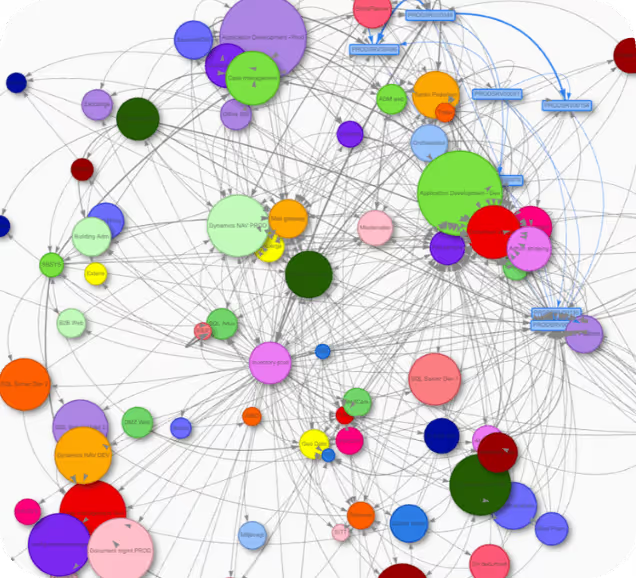
Mugato ships the first generation of the platform: a purpose-built graph database that captures meta-information at minute-level detail and never discards it.
The result is a temporal record of your environment, one you can rewind. Replay yesterday, last week or last quarter exactly as it was.
june 2020 - processing
Six months later, Gen 2 adds process mining and dependency mapping on top of the captured meta-information.
The shift matters because raw data was never the hard part. Finding meaning in it was. Gen 2 surfaces insight at the business application layer instead of handing customers a mountain to dig through.

january 2021 - visualization
Mugato was originally designed as a data feed: highly enriched information customers would package and integrate into their own workflows. Like milk in a Tetra Pak, the value was in the carton, not the design of it.
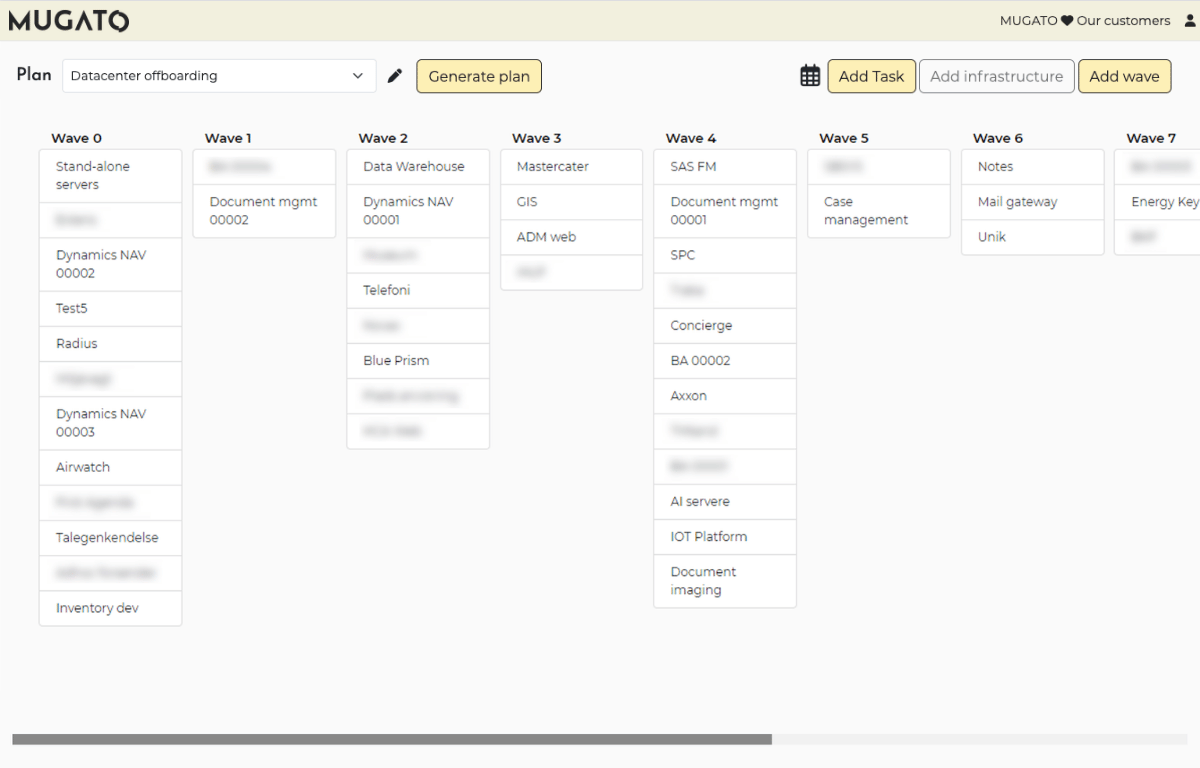
In January 2021, the founders made a call: no more Tetra Pak. The graphical interface customers know today was built, and Mugato became a self-service platform you could open, explore and use.
february 2022 - transformation
Gen 3 introduces prescriptive guidance inside the platform's decision intelligence layer.
For customers with the infrastructure maturity to act on it, this means step-by-step instructions for transformation projects. Not just "here's what's connected to what," but "here's the sequence to migrate it in."
2025 - expansion
Mugato expands into the United States and across Europe, with Fortune Global 500 customers in production.
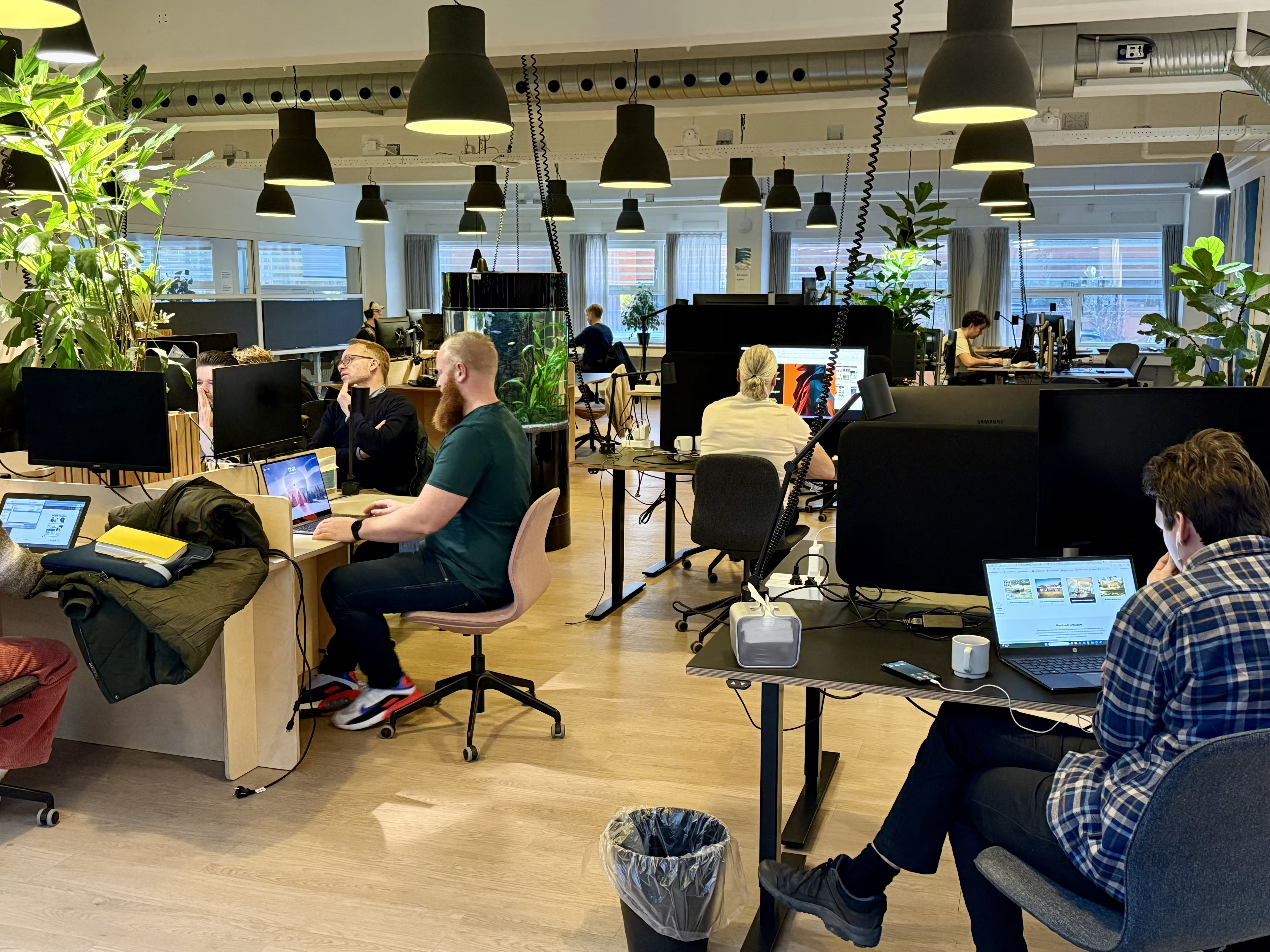
The team grows past 20 specialists, bringing 227 years of combined enterprise IT experience and 52 patents between them. Built to deliver the precision enterprise customers expect.