Use Case: minimum viable company
KNOW EXACTLY WHAT TO RECOVER BEFORE DISASTER STRIKES
Recovery plans fail when they don’t match production reality. Mugato automatically maps every dependency and generates prioritized restoration sequences, so you know exactly which systems to recover, in what order, before disaster strikes.










How it works
FROM STATIC PLANS TO LIVING RECOVERY INTELLIGENCE
Five capabilities that turn disaster recovery from a static, outdated exercise into a continuously validated, dependency-aware program.
Continuous infrastructure synchronization
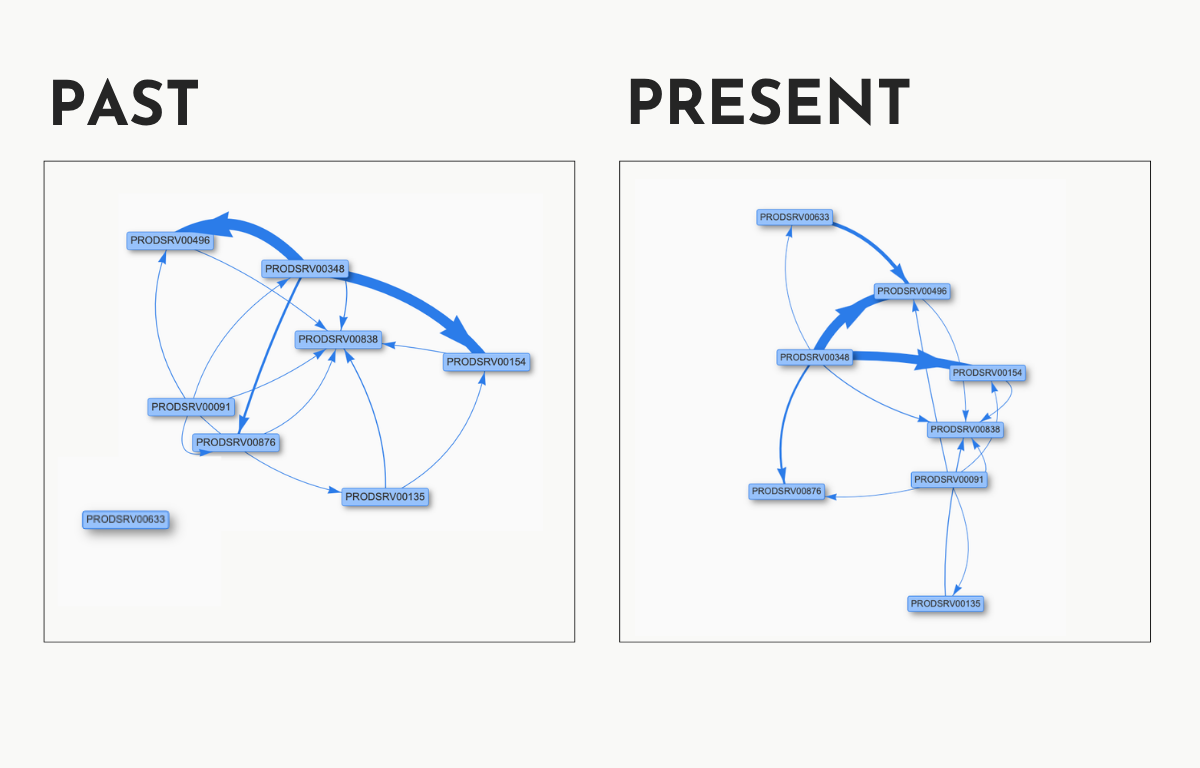
Recovery plans become outdated within weeks as systems migrate, applications evolve and dependencies shift. Manual plans based on outdated documentation fail.
Infrastructure is in a constant state of change. Mugato continuously detects every change, replacing static plans with living, always-current documentation. Recovery plans that don’t match reality fail during disasters. Sontinuous synchronization eliminates the gap between documentation and current infrastructure.
Restoration plans based on dependencies
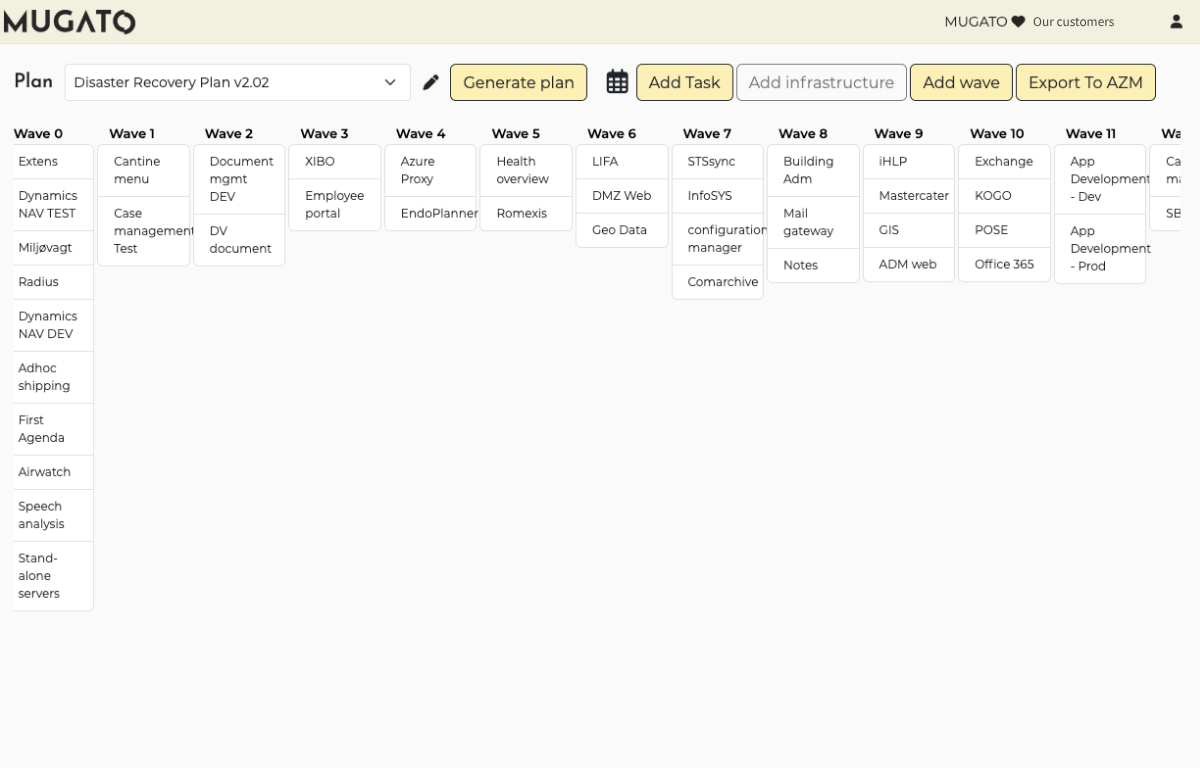
When recovery is tested, teams spend hours figuring out which systems to bring up first, leading to failed restarts and cascading failures.
Mugato automatically maps system dependencies including communication patterns, data flows and shared resources, generating prioritized restoration sequences with step-by-step recovery steps based on observed behavior. Dependency-based sequencing ensures systems are restored in the correct order, reducing recovery time and preventing failed restarts.
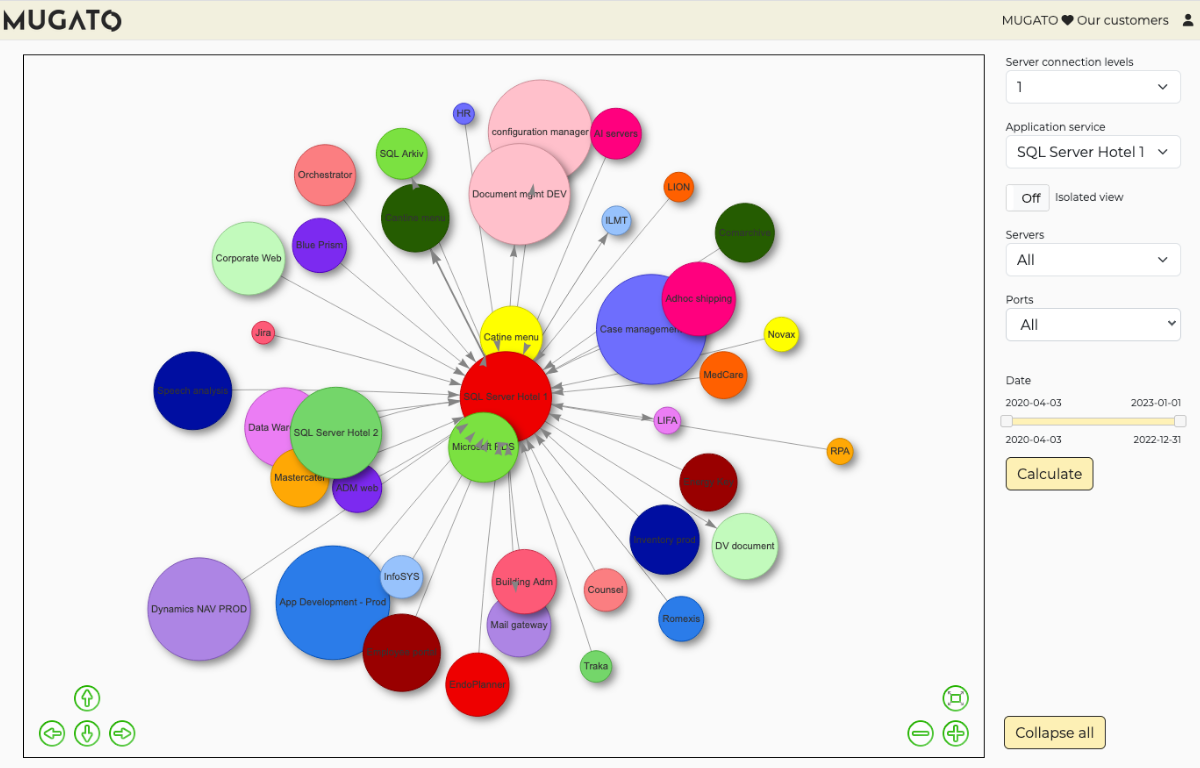
Automated service dependency mapping
Teams can’t clearly define which applications are truly critical to revenue versus nice-to-have, leading to poorly scoped recovery plans.
Mugato links infrastructure to business services, giving leadership an authoritative view of which systems are truly essential and providing the sovereign control needed to define the minimum viable company. Correct scoping is the foundation of effective disaster recovery, protecting too much wastes resources; protecting too little exposes revenue streams.
Data-driven recovery validation
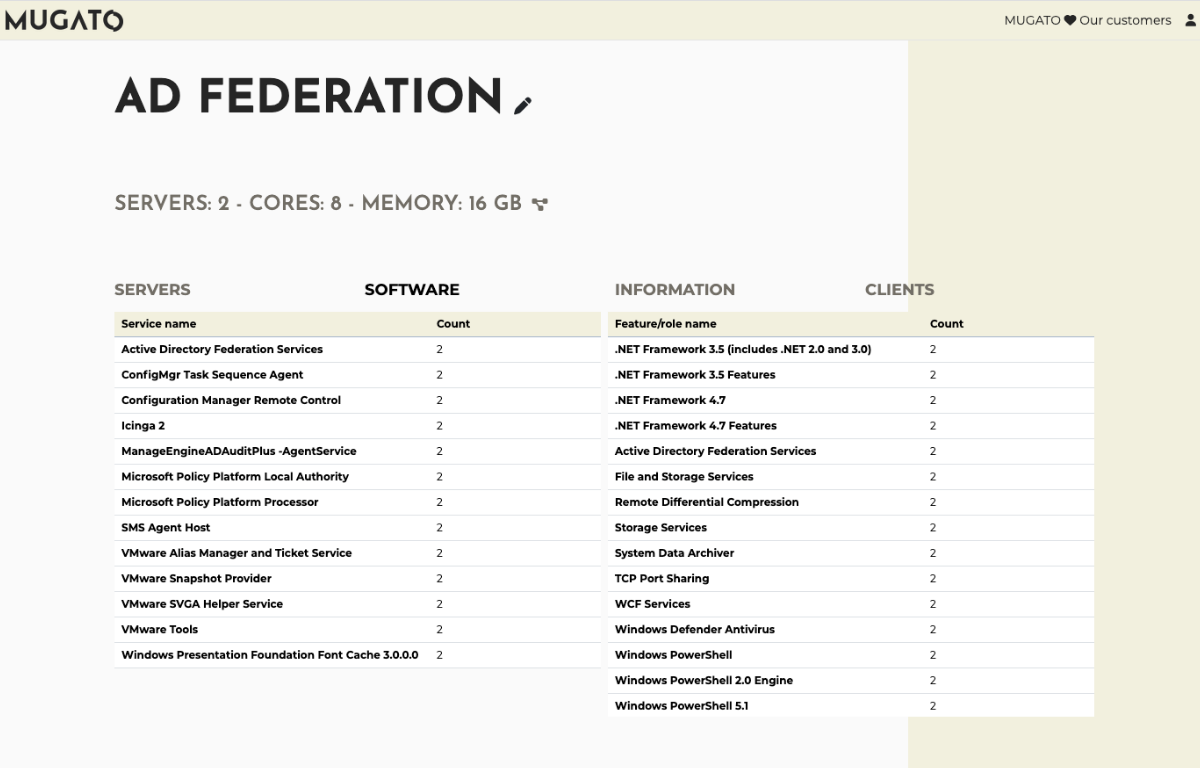
Manual DR testing is so expensive and disruptive that organizations only do it once a year, leaving them uncertain whether plans reflect reality.
Mugato provides accurate dependency data and automatically updated restoration sequences that enable teams to validate recovery objectives without full failover testing. Recovery plans built on real-time infrastructure data replace assumptions. Continuous validation against real dependency data means your recovery plans are always tested against current production reality.
Resource consumption tracking
Teams don’t know what infrastructure their DR site actually needs, so they over-provision or hope for the best.
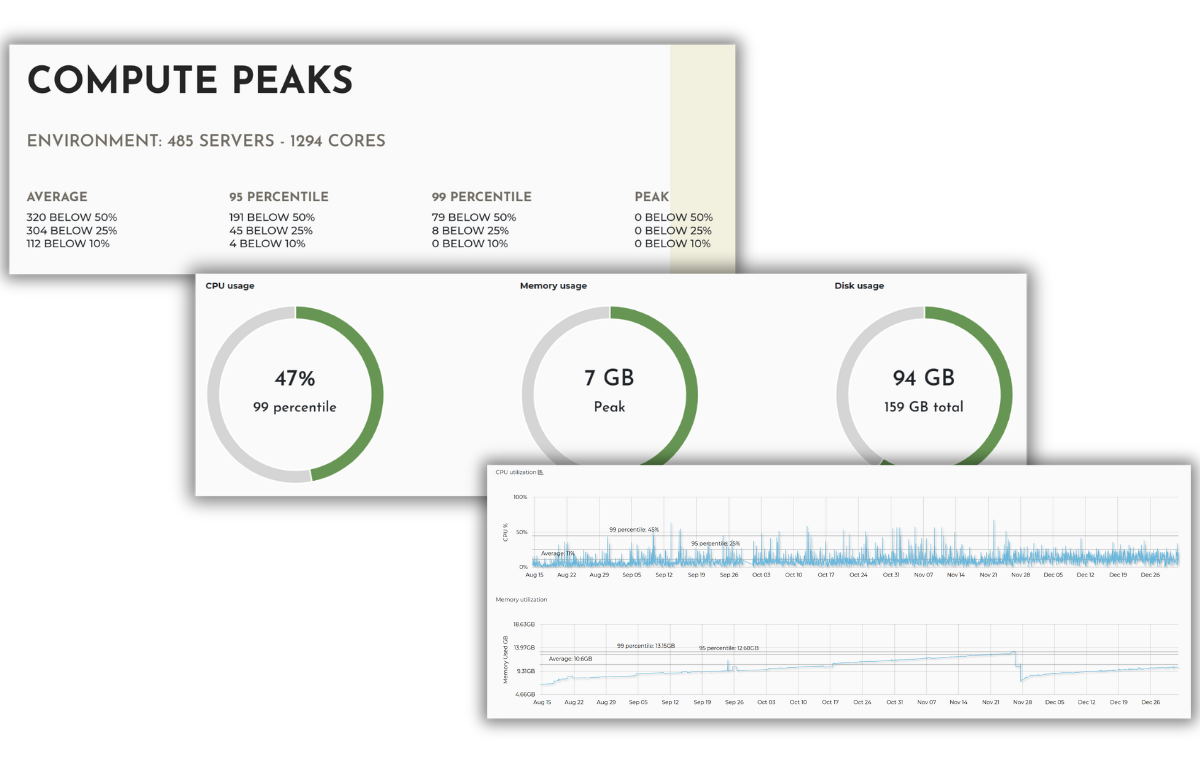
Mugato tracks actual resource consumption across your infrastructure with minute-granularity temporal data, enabling proper sizing of disaster recovery sites based on observed utilization, not estimates. Under-provisioned disaster recovery sites can’t support minimum viable company workloads; over-provisioned sites waste budget.
Key Outcomes
0
Every upstream and downstream dependency traced automatically, ensuring no component is overlooked when defining minimum viable company.
24/7
Continuous collection ensures recovery plans match production reality as infrastructure changes.
100%
Full dependency chains traced from observed behavior, including connections no one documented, so MVC scoping reflects what actually runs, not what people remember.
<30 MIN
A single lightweight VM begins collecting within 30 minutes, with full dependency mapping in two weeks. Requires no agents or deployment project.
PAIN POINTS VS. PAINKILLERS
See how Mugato addresses the most common disaster recovery and minimum viable company (MVC) challenges.


What our customers are saying

For the first time we have a tool that gives us the total overview. Highly complex data is turned into digestible bits and creates a bridge that helps the whole team understand what's going on.
90%
Intregated with
90%
Intregated with

After less than an hour we were self-reliant. Mugato's system is truly a game changer.
90%
Intregated with
90%
Intregated with

Mugato gave us massive yearly savings on our global infrastructure and a quick return on investment by reducing complexity and licensing.
90%
Intregated with
90%
Intregated with


WHAT OUR CUSTOMERS
ARE SAYING
Ready to see the
shape of your it?
Stay ahead with Mugato: get product updates, event invites,
expert insights and more. Or let us show you how Mugato
can map your entire IT landscape without a single agent.